

A straight look at the process, from the moment our driver turns onto your block to the moment your tank is full.
Most homeowners have never watched the heating oil delivery process from start to finish. The truck shows up, something happens outside for a few minutes, and then the heat works again. The details in between are invisible.
That invisibility is fine when everything goes smoothly. But it creates problems when something goes wrong and the homeowner has no frame of reference for what should have happened. It also makes it harder to be a good customer, to prepare properly, and to know what to expect from a company that is actually doing the job right.
So here is the full picture of the heating oil delivery process. This is what happens when a Pinstripe truck pulls up to your address, from the planning that happened before we left the terminal to the receipt that lands in your inbox after we drive away.
Before the Truck Ever Reaches Your Street
A delivery begins well before the truck turns onto your block. It starts at the terminal, and in the planning that happens before the driver starts his route.
Loading at the Rack
The fuel we deliver comes from a wholesale terminal called a rack. The closest rack to Pinstripe's operation is Westmore in Mount Vernon, about 16 miles from our home base in Port Chester. Our trucks make multiple trips to the rack each day during the heating season, loading fresh No. 2 heating oil, which in New York is Bioheat with at least 10% biodiesel (B10), as state law has required since July 2025.
The truck is a calibrated metered delivery vehicle. The meter is certified for accuracy and measures the exact number of gallons pumped into each tank. When the meter says 187 gallons, 187 gallons went into your tank. That number appears on your receipt and is what you are billed for.
Route Planning and Access Notes
Before the driver rolls, the day's route is organized. Deliveries are clustered by neighborhood and sequenced to minimize transit time between stops. For repeat customers, the driver has access to notes from previous deliveries: fill pipe location, driveway clearance, gate codes, whether to call the super first, which side of the building the fill pipe is on, and any other details that make a smooth delivery possible.
For first-time customers, we work from the information provided at order. This is why it matters to be specific when you order. The more detail you give us about your address upfront, the better your first delivery goes. After that first visit, your driver updates the notes and every delivery after it benefits from that knowledge.
Arrival: What the Driver Is Doing Before He Knocks
When the truck arrives at your address, there is a brief but deliberate assessment before anything else happens. The driver is using a trained eye to read the property with a specific purpose.
Reading the Approach
The driver is looking at several things simultaneously. Where can the truck park safely without blocking traffic or violating any posted restrictions? Is the path to the fill pipe clear? Is there snow or ice that could make the hose run dangerous? Are there any obstacles, parked cars, or obstructions that would require the hose to be run an unusual distance or at an unusual angle?
In the Bronx and upper Manhattan, this assessment often involves navigating a block where double-parking is the norm and a fire hydrant sits twenty feet from your fill pipe. In Westchester, it might mean a long driveway with a low-clearance tree the driver has to decide whether to chance with a fully loaded truck.
This street-level judgment is one of the reasons local drivers matter. A driver who has never been to your block before has to figure all of this out from scratch. A driver who has been there ten times already knows exactly where to position the truck.
Locating the Fill Pipe
The fill pipe is the metal pipe that extends from your oil tank to the outside of your home, typically capped with a screw-top cap labeled OIL or FUEL OIL. It is usually located on the side of the building or near the foundation, though in older New York properties it can be in a basement, behind a gate, at the end of a long driveway, or in any number of locations that are not immediately obvious.
For first deliveries, finding the fill pipe can take a couple of minutes. If it is buried under snow or behind a locked gate, that is when the driver may call you. That call means the driver is working to complete your delivery instead of marking it inaccessible and moving on.
THE SINGLE MOST COMMON REASON A DELIVERY CANNOT BE COMPLETED
A fill pipe buried under snow or blocked by a parked car. It's a property access issue, and homeowners can almost always prevent it. Keep a path shoveled to your fill pipe during the winter months. It takes five minutes and guarantees your delivery goes through.
The Hose Run: Where the Physical Work Happens
Heating oil is transferred from the truck to your tank through a flexible hose that runs from a reel on the back of the truck to your fill pipe. In a suburban driveway with the fill pipe ten feet from the street, this is straightforward. In New York City, it is often not.
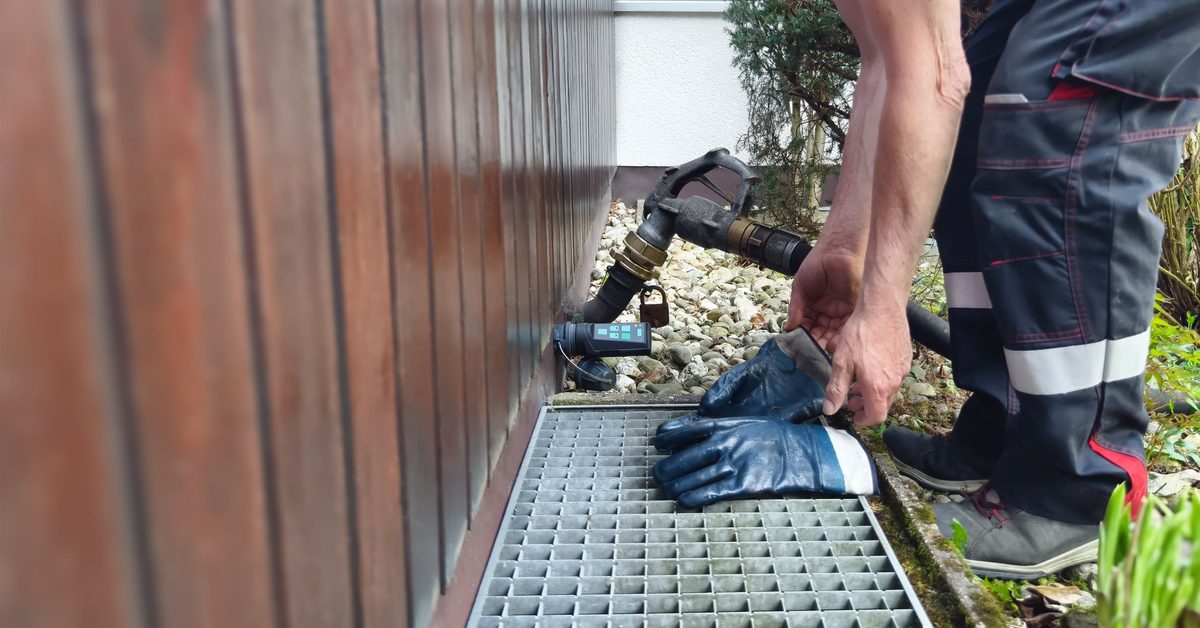
What a Hose Run Looks Like in New York
Our hoses extend up to 150 feet. That covers most residential properties, but in dense urban situations it can mean the hose runs through a gate, around a corner, across a sidewalk, or down a set of stairs to a basement fill point. The driver manages the hose to keep it out of foot traffic, secured against tripping, and positioned so it can be retrieved cleanly after the delivery.
When the hose run is particularly long or complex, it takes time. That time is normal and expected. A driver rushing a difficult hose run to save five minutes is a driver who is more likely to create a spill or damage the fill connection. We do not rush hose runs.
Connecting to the Fill Pipe
The fill pipe cap is removed and inspected before the nozzle goes on. The driver is looking for rust, damage, a loose fitting, or anything that suggests the connection might not be clean and secure. A compromised fill pipe connection is a spill risk, and preventing spills is both a safety obligation and a New York State environmental compliance requirement.
Once the connection is confirmed clean and secure, the nozzle locks onto the fill pipe and the pump is engaged.
The Delivery: What Is Actually Happening While the Meter Runs
Once the pump is running, the driver stays with the truck. This is a supervised delivery from start to finish.
Monitoring the Fill
The driver watches the meter, monitors the hose for any sign of pressure change that could indicate a problem, and listens to the vent pipe. Every heating oil tank has a vent pipe, a separate small-diameter pipe that allows air to escape as oil fills the tank. A properly functioning vent pipe makes an audible whistling or hissing sound during a fill. When that sound stops, the tank is approaching full. An experienced driver uses both the meter and the vent to confirm the delivery is going correctly.
Knowing When to Stop
The driver knows approximately how many gallons the order calls for and has a general sense of tank capacity based on the property and any notes from previous deliveries. The goal is to deliver the ordered quantity without overfilling. Overfilling wastes oil, and oil that enters the vent pipe can discharge into the basement or the ground, creating a spill that is expensive to remediate and potentially subject to environmental penalties under New York State law.
This is why the combination of meter reading, vent monitoring, and driver experience matters. Every fill involves trained judgment along with the equipment.
The Total Time
A typical residential delivery takes between 10 and 25 minutes from the time the truck stops to the time it pulls away. It runs shorter for a simple property with easy access and longer for a complex hose run, a slow fill rate on an older tank, or a first-time delivery where the driver is learning the property. If a driver is at your address for 30 minutes and you are wondering what is taking so long, that is usually a good sign. It means they stayed until the job was done right.
DO YOU NEED TO BE HOME DURING THE DELIVERY?
For most residential accounts, no. As long as the fill pipe is accessible and we have any relevant access information on file, the driver can complete the delivery without you present. You will receive a digital receipt after the delivery confirming the gallons delivered and the total charge. If you prefer to be home, that is always welcome too.
After the Fill: What Happens Before the Truck Leaves
The pump stops, and the driver still has work to do.
Purging the Hose
Before the nozzle is disconnected from the fill pipe, the hose is purged. This removes the remaining oil in the hose line back into the truck so it does not drip onto your property when the connection is broken. A driver who skips this step leaves an oil stain on your driveway or sidewalk. We do not skip this step.
Replacing the Fill Cap
The fill pipe cap goes back on firmly. A loose or missing fill cap is a contamination risk: rainwater, debris, and insects can enter an uncapped fill pipe. The driver checks that it is hand-tight and properly seated before moving to the hose.
Rolling the Hose
The hose is rolled back onto the reel on the truck. This takes a few minutes on a long run. The driver checks the hose for any damage or wear as it comes in. A hose with a compromised section gets flagged for inspection or replacement before the next delivery.
The Receipt
Every Pinstripe delivery generates a delivery ticket with the gallons delivered, the price per gallon, and the total charge. For customers who prefer a hard copy, the driver leaves the ticket on site. For customers set up for digital receipts, it goes to the email on file. Either way, you get documentation of exactly what was delivered and what you are being charged before any payment is processed.
What Gets Logged After the Delivery
After each delivery, the driver updates the account notes for your address. This is the part of the heating oil delivery process that most customers never see, but it is one of the most important things we do.
What gets noted: whether the fill pipe was easy to locate or not, any access issues that came up, the condition of the fill cap, anything unusual about the tank or vent behavior during the fill, and any preferences the customer expressed. If there was a car parked in front of the fill pipe that made the hose run awkward, that gets noted so the driver knows to look out for it next time. If the building super has a preferred contact window, that goes in the notes.
This is what separates a local company from a dispatch operation. When you order from Pinstripe a second time, your driver is starting with everything learned on the first visit. He already knows your building.
The Heating Oil Delivery Process From Start to Finish
Here is the complete picture in one reference:
Stage | What is happening |
|---|---|
Before the truck rolls | Order confirmed, gallons loaded, address and access notes reviewed, truck pre-trip inspection complete. |
Arrival at the property | Route assessment, parking position, access path to fill pipe identified and cleared if needed. |
Hose run | Hose paid out from the reel, routed to the fill pipe, secured against trip hazards. Fill cap removed and inspected. |
Delivery | Pump engaged, meter running, tank filling. Driver monitors for spill or overfill. Tank vent checked for airflow. |
Completion | Pump stopped, hose purged. Meter reading confirmed. Fill cap replaced and secured. Hose rolled back. |
Documentation | Delivery ticket generated with gallons delivered, price per gallon, and total. Receipt left onsite or sent digitally. |
Notes updated | Any access issues, fill pipe condition concerns, or special instructions logged to the account file. |
What You Can Do to Make Every Delivery Go Smoothly
Most of the heating oil delivery process requires nothing from you at all. But a few things on your end make a real difference.
- Keep the fill pipe accessible. Shoveled in winter, unobstructed year-round. This is the single most impactful thing a homeowner can do.
- Have your phone on when a delivery is scheduled. If there is an access question, the driver will call. A missed call can mean a missed delivery.
- Give us your access details upfront. Gate codes, building super contact info, fill pipe location notes, parking instructions. The more we know before we arrive, the faster and cleaner the delivery goes.
- Know where your fill pipe is. You don't need to be there during the delivery, but you may need to describe it when you order for the first time.
- Order before you hit empty. A delivery to a tank that still has some oil in it is a straightforward fill. A delivery to a completely empty tank that needs a system restart afterwards is a longer, more involved job. The quarter-tank rule protects both of us.
The Bottom Line
A heating oil delivery is a skilled job done under time pressure on streets that are often not designed for it, at addresses that range from easy to genuinely difficult, by drivers who are accountable for every gallon they deliver and every spill they prevent.
When the heating oil delivery process goes well, it looks effortless. That is the point. The preparation, the route knowledge, the careful hose work, and the post-delivery notes are all invisible to the homeowner, which is exactly how it should be.
We are proud of how our drivers do this work. If you have never ordered from Pinstripe before and want to see it firsthand, schedule a delivery. We serve the Bronx, Brooklyn, Manhattan, Queens, and Westchester County. Transparent pricing, no contracts, and drivers who know your block.
SCHEDULE YOUR NEXT DELIVERY WITH PINSTRIPE.
The Bronx, Brooklyn, Manhattan, Queens, and Westchester County. Local drivers. No contracts. Transparent pricing before you order.